Search This Blog

Showing posts with label Substance Dualism. Show all posts

Friday, June 3, 2011

Substance Dualism (Part Five): Explanatory Impotence


(Part one, Part two, Part three, Part four)

This is the last in a series of posts on substance dualism. The series has been following the discussion in William Jaworski's book Philosophy of Mind: a Comprehensive Introduction. Having initially addressed the basic argument for substance dualism, we have more recently been concerned with three problems that the substance dualist must confront. Two of these have already been outlined. In this post, the third problem - that of explanatory impotence - will be discussed.


1. Inferences to Best Explanation
If substance dualism is true, then we (persons/minds) can exist without bodies. But if we can exist without bodies, then why is it that we all seem to be attached to a body? If the mind-body relation is not a necessary one, then surely some explanation of this correlation is in order? Aristotle posed this very challenge to the dualist back in the day, and it speaks to an interesting line of criticism - one which crops up again and again in the mind-body debate.

The line of criticism in question - in this case directed at the substance dualist - proposes that if a given theory is a poor explanation of the data that needs to be explained, then it can be dismissed in favour of a better explanation.

This brings us to the concept of inference to best explanation (a concept discussed on this blog before) and the correlative concept of inference from a worse explanation. Both work with abductive arguments and, following Peirce's classic schema, look something like this.


  • (1) H is some data in want of an explanation.
  • (2) E, if true, would account for H.
  • (3) E is a better/worse explanation than all other rival explanations (E1....En).
  • (4) Therefore, E is probably/probably not true.


Formally, this kind of inference commits the fallacy of affirming the consequent. The comparative exercise undertaken in the third premise, combined with the probabilistic nature of the conclusion, is designed to overcome this problem.


2. Is Substance Dualism a Worse Explanation?
The charge here is that substance dualism, when compared to its rivals, is a worse explanation of the available data, and should therefore be dismissed. How is this charge sustained?

First, consider the data that any theory of mind needs to explain. We've already pointed to one element of that data: the apparently steadfast connection and interaction between minds and physical bodies. But the data is more nuanced than that. For one thing, not just any physical body appears to have a mind: only certain evolutionarily recent organisms have that honour. What's more, mental activity is only correlated with certain parts of those organisms: brains and nervous systems, not hairs and fingernails. How do substance dualists account for these particular correlations?

The answer is that they don't appear to be able to do so. In fact, it is in their interests to show that the connection we observe is apparent rather than real. After all, they want to show that there is no essential connection between mind and body.

This highlights a curious feature of the dialectic between substance dualists and their critics. The critics will want to argue that since other theories of mind do account for the puzzling mind-body correlations outlined above, they are stronger and more rationally compelling. The substance dualists will want to argue that a theory which explains mental-physical correlations has no advantages over its rivals. The correlation can either be dismissed as irrelevant or accepted as a brute fact.

Thus, there appears to be real gap between the two sides over what needs to be explained by an acceptable theory of mind. Alas, gaps of this sort frequently emerge in philosophy.


3. Conclusion
In summary, the problem of explanatory impotence may have some force, but this depends on the data we think warrants explanation. I personally feel that the kinds of mind-body correlations discussed by Jaworski merit explanation. Consequently, I would would be disinclined to accept a theory that dismissed them. To shift from this position, I'd need to be convinced that substance dualism had other epistemic advantages. Since that seems unlikely given the other posts in this series, substance dualism is perhaps best left to one side.

All that said, a recent tactic among some proponents of substance dualism is to point out that even if the arguments in its favour are not all that strong, they are no worse than the arguments put forward in defence of, say, physicalist theories of mind. Thus, to cling to substance dualism is no less rational than to cling to physicalism.

Thursday, June 2, 2011

Substance Dualism (Part Four): The Problem of Interaction


(Part One, Part Two, Part Three)

I've been addressing arguments for and against substance dualism over the past week. In the most recent post on the topic, I considered the first of three arguments against the theory. In this post, I turn to the second of those three argument: the argument from the problem of interaction. In the course of addressing this problem we will encounter some possible refinements of the substance dualist position.


1. The Problem of Interaction
This morning I did something unusual. I decided to write a blogpost on substance dualism: I formulated the intention and then followed through on it by executing the series of bodily movements referred to as 'typing'.

But wait a minute, there's nothing unusual about this is there? Surely we do things like that all the time, i.e. formulate intentions and then carry them out by executing a series of bodily movements? Yes, you're quite right; there's nothing unusual about this in and of itself. But it is quite unusual from the perspective of substance dualism.

The difficulty can be stated in the form of an argument:

  • (1) If substance dualism is true, persons cannot causally influence bodies.
  • (2) Persons can causally influence bodies.
  • (3) Therefore, substance dualism is false.

Once again, it is the first premise that is the main source of controversy here. What can be said in its favour?


2. The Physical Basis of Causation
Quite a lot can be said in favour of premise (1). To see this, we need to bear in mind the ontological commitments of the substance dualist. Remember, they argue that mental entities can exist wholly apart from physical entities; and that physical entities can exist wholly apart from mental entities.

This creates a problem when mental entities are thought to be causing changes in physical entities, as is the case in the intention example given above. You see, everything we know about causation suggests that in order for changes to be caused in a physical object (or for a physical "event" to be brought about) the entity causing those changes must possess two key properties: (i) a spatial location and (ii) the ability to transfer energy. For in the process of physical causation, energy is being transferred from one location to another.

Jaworski uses the example of the combustion engine to illustrate this point. In order for your car to be propelled forward, the following sequence of events must take place: spark plugs in the engine must be ignited by a high-voltage pulse; the ignition of the spark plugs must release energy from the gasoline (petrol) by combustion; the energy from the gasoline must drive the pistons; and they in turn must drive the crankshaft, which drives the axle, which turns the wheels. Each stage in this process involves energy transference from one spatial location to another.

Here then is a serious problem for the substance dualist. Both of the key properties for causation are physical in nature, indeed they are perhaps the very essence of the physical. They are not possessed by mental entities.

So:

  • (4) Bodies are physical entities.
  • (5) Only entities with a spatial location and the ability to transfer energy can cause changes in physical entities.
  • (6) According to substance dualism, persons have neither spatial locations nor the ability to transfer energy.
  • (1) Therefore, if substance dualism is true, persons cannot causally influence bodies.


3. Substance Dualist Responses
With premise (1) now fully defended, the problem of interaction seems to be robust. How can the substance dualist respond? There are several possibilities, some of which lead us towards more refined versions of substance dualism.

Let's consider the less-refined rebuttals first. One is to simply reject premise (1) (or, more precisely, premise 5) and argue that non-physical causation is intelligible, or at least no less intelligible than purely physical causation. The idea here is that the ability of physical entities to cause changes in one another is basically an inexplicable brute fact. We simply have to accept it as a given. So why not accept the ability of mental entities to cause changes in physical entities as a similarly brutish fact?

One problem with this line of response comes from the law of conservation of energy. It is a basic principle of physics that the amount of energy in a closed system is fixed: add up the total energy before and after an event in such a system and you will get the same figure; energy is simply moved around from one location to another. If mental entities were causing physical events then we would expect energy to be added to the relevant system (in this case the human body and its surrounding environment) from outside. This would require a violation of the conservation law that does not appear to take place.

We can map this exchange out as follows:


  • (7) If physical-physical causation is accepted as a brute fact, so too can mental-physical causation be accepted as a brute fact.
  • (8) Mental-physical causation would involve the violation of the conservation law of energy, this law does not appear to be violated.


This argument effectively presents the substance dualist with a dilemma: they can either have mental-physical causation or the laws of physics, they cannot, or so it seems, have both.

It should be noted in passing that in addition to being part of an argument against substance dualism, the conservation law of energy is often used to support mind-body physicalism.


4. Parallelism and Occasionalism
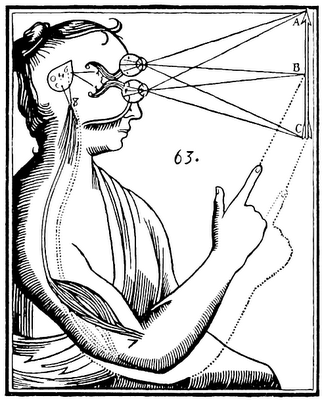
If rejecting premise (1) seems too much to bear, the substance dualist can always reject premise (2). This would mean a rejection of the apparent causal relationship between mental entities such as intentions and physical acts such as bodily movements. Such a rejection would leave us with the unexplained fact that mental entities seem to be very closely correlated with certain physical acts. How, we must ask the dualist, can this be the case?

In answering this question, the substance dualist will be forced to introduce one of two possible refinements to their original position. The first possible refinement is called "parallelism"; the second is called "occasionalism".

Parallelists believe that mental and physical systems, although ontologically distinct, run in parallel to one another. This creates the impression that events in one system are causing changes in the other system, but this is purely coincidental.

An analogy with clocks is often used to illustrate the point. Suppose you have two clocks, A and B. Both are wound up at the same time (remember when you had to wind-up clocks?) and thus run in synchrony. Now suppose you remove the chimes from clock A and the hands from clock B. As a result, clock B will appear to chime when clock A's hands arrive at a particular time. This might create the impression of a causal link between the two clocks but that is all it is: an impression. There is no real causal link. Something analogous could be taking place between the mind and the body.

Parallelism is certainly a possibility, but how plausible a possibility is another question. In the clock analogy we have an explanation for the parallelism; in the mind-body example we have no such explanation. Thus, accepting parallelism would seem to require accepting a significant, inexplicable coincidence. Sort of like the coincidental relation between epistemic faculties and moral truths proposed by some moral realists. This seems like a big pill to swallow just to save the substance dualist worldview.


  • (9) The mental and physical system may simply be running in parallel, thus creating the impression of a causal link between them.
  • (10) Accepting parallelism would force us to accept a significant coincidence as a brute fact, we should be reluctant to do so unless there are other compensating benefits.


An alternative way in which the substance dualist can reject premise (2) is by adopting an occasionalist view of mind-body causation. According to this view, God acts as a causal middleman producing changes in the physical body that correspond to changes in the mind.

Leaving aside any challenge to the explicitly theistic grounding for this view, there are two objections that need to be considered. First, it has the strange consequence that God is the only real agent in existence, i.e. the only one that can bring about changes in the real world that deserve to be called "actions". This has a further consequence. Agency is an essential precondition for moral responsibility. So if none of us are really agents, then none of us are ever morally responsible. That will strike many as absurd.

Finally, the theory has the unenviable whiff of ad-hocery about it. In other words, the supposition that God acts as a causal middleman is being adopted purely to save face. It is generally agreed that the acceptance of ad hoc principles of this sort is to be avoided.


  • (11) God could act as a causal middleman between persons and bodies.
  • (12) The assumption that God acts as causal middleman: (i) leads to the absurd conclusion that God is the only agent; and (ii) is ad-hoc.


5. Conclusion
In the end, it seems like the problem of interaction forces the substance dualist into an uncomfortable corner. They can manoeuvre their way out it, but only by accepting some epistemically costly doctrines. They need to ask themselves whether the commitment to substance dualism is really worth these costs.

Tuesday, May 31, 2011

Substance Dualism (Part Three): The Problem of Other Minds


(Part One, Part Two)

Substance dualism has been preoccupying me over the past week. In the two previous posts, I've looked at the basic argument for it, as well as the criticisms of that argument. In this post, I'll consider the first of three arguments against substance dualism: the argument from knowledge of other minds. Once again, William Jaworski's excellent book is the source for this post.


1. Introduction to the problem
Jim and Pat are housemates. Jim is sitting in the kitchen one afternoon when Pat arrives home. He has been out jogging. Seeing Jim, Pat gestures vaguely at the sink before placing his hands on his knees and starting to pant. Jim understands. He takes a glass from the cupboard, walks over to the sink, and pours Pat a glass of water. Pat takes it and thanks Jim.

What has just happened? Put simply, Jim read Pat's mind: he inferred that Pat desired a glass of water from Pat's body language. There's nothing unsurprising about this either: Mind reading exercises of this sort would appear to be a commonplace.

But these commonplaces create a problem for the substance dualist. The problem can be expressed in terms of the following argument:

  • (1) If substance dualism is true, then we cannot know the mental states of others.
  • (2) We do, on at least some occasions, know the mental states of others.
  • (3) Therefore, substance dualism is false.

I would expect premise (1) to be the major bone of contention here. So developing a more persuasive argument in its favour is our first port of call.


2. The Argument for Premise One
Why is the substance dualist committed to premise (1)? The answer has to do with the presuppositions that make mind-reading possible. For Jim to infer Pat's state of mind from his behaviour, he has to assume that there is some consistent connection between physical indicators such as body language and the mind. We could call this the assumption of the "mental code". The problem is that the substance dualist cannot assume the existence of such a code.

To see why this is the case, we have to remember the ontological commitments of the substance dualist. They believe that mental entities can exist without any physical substrate or grounding; and that physical entities can exist without any mental accoutrements. This, as you recall, is one of the key premises of their basic argument. But it has the unfortunate consequence that there need not be a mental code because it implies that there is not necessarily a consistent connection between physical indicators and mental states.

Jaworski illustrates the point as follows. Consider a human body and a table. We traditionally assume that one mind is associated with the human, but not with the table. But in the substance dualist worldview other relationships between mind and body are equally plausible: there could be several minds associated with the body, there could be a mind associated with the table, there could be no mind associated with either the body or the table, or there could be a mind associated with the body-table collection. All such things are made possible because the physical can be explained entirely without reference to the mental and vice versa.

This gives us the following argument

  • (3) For knowledge of the mental states of others to be possible, there must be a reliable connection between certain physical indicators and mental entities.
  • (4) If substance dualism is true, there is no reliable relationship between the mental and the physical.
  • (1) Therefore, if substance dualism is true, we cannot know the mental states of others.


3. The Substance Dualist Response
The substance dualist is far from finished. Certain responses are available to him or her. For starters he or she can accept premise (1) and dispute premise (2). After all, our primary grounds for accepting premise (2) are a combination of intuition and tradition, neither of which would seem a reliable guide to truth. So we could easily reject premise (2).

But look at it this way: (2) is part of our intuitive, pre-theoretical worldview. We can, indeed, cast off elements of our pre-theoretical worldview, but only if we have compelling reasons to do so. For instance, that heavier objects fell faster than lighter objects might have seemed obviously true at one point in time. But we now have compelling reasons - both logical and empirical - for rejecting that belief. The question is whether similarly compelling reasons can be offered in favour of substance dualism. We have already evaluated the basic argument and found it somewhat lacking. So hanging onto premise (2) would seem like the better bet.

We can spell out this little exchange as follows:

  • (5) Our belief that we can know the minds of others is part of our intuitive, pre-theoretical worldview - this is not a reliable guide to truth.
  • (6) We should only discard parts of our pre-theoretical worldview if we have compelling reasons to do so - such reasons do not exist in the case of substance dualism.

Are there any other responses available to the substance dualist? Indeed there are.

Go back now to premise (1). We offered what seemed to be a persuasive argument in its favour, but that argument may have made some unwarranted assumptions. Two in particular seem relevant.

First, we assumed that the only way to know the minds of others was through inference from observed physical indicators. The dualist can argue that there are others ways in which to acquire knowledge of other minds. They could argue that individual minds are directly linked to one another in the manner envisaged by proponents of ESP. This is a difficult claim to evaluate but it would appear problematic. For starters, the evidence on ESP is patchy at best. And what’s more, even if some people have ESP, it’s pretty clear that others don’t. I know, for example, that I don’t but I still think I can, on occasion, know what other people are thinking by inferring it from their physical behaviour. So it would seem like the problem will remain even if ESP is a reality. Let’s formulate some premises on this:


  • (7) Inference from physical indicators in not the only way to know the minds of others; we could acquire such knowledge through, for example, ESP.
  • (8) Evidence for ESP is patchy at best; furthermore people who don’t have ESP still appear to, occasionally, know the minds of others solely by inference from physical indicators.


Second, we assumed that, in the substance dualist worldview, all possible relations between the mental and the physical were equally plausible. This need not be the case. The dualist could argue that we have good evidence for thinking that the one-mind-for-every-human-body-relation is the most plausible. How so? Well, you know that that relation applies to you so you can, by inductive inference, argue that it holds for all human bodies. But this won’t do. Inductive inferences are only warranted if the inference is made from a reasonable sample size. A sample of one would seem insufficient.

  • (9) The substance dualist can, by inductive inference, argue that the one-mind-for-every-human-body-relation is the most plausible.
  • (10) This inference is not warranted because the reference sample is too small.


4. Conclusion
The problem of knowledge of other minds is a serious one for the substance dualist. They are not entitled to assume the existence of mental code because of their ontological commitments. Furthermore, although our knowledge of other minds would seem to be part of our pre-theoretical worldview - and so, not necessarily true - we would need compelling reasons for casting it off. The substance dualist has not yet provided them.

Sunday, May 29, 2011

Substance Dualism (Part Two): Criticisms of The Basic Argument


In the previous post, I summarised William Jaworski’s presentation of the basic argument for substance dualism. In this post, I’ll be covering Jaworski’s discussion of the criticisms of that basic argument. Remember, substance dualism is a time-honoured position within the philosophy of mind and it’s well worth knowing why some find it persuasive and others do not.

As we saw the last day, the basic argument for substance dualism relies on two premises. The first of those premises derives from the axioms of identity and is relatively uncontroversial. The second of those premises makes a modal claim. It says that we (i.e. minds/persons) can exist without bodies. This claim is controversial and is supported by two equally controversial arguments: (i) the conceivability-possibility argument; and (ii) the essential property argument. Both were discussed in part one. Now we turn to the criticisms of both those arguments.


1. What can we actually conceive?
Let’s focus on the conceivability-possibility argument first. As we know, this argument has the following form:

  • (2.1) If it is conceivable that x can exist without y, then it is possible that x can exist without y.
  • (2.2) It is conceivable that we could exist without bodies (including brains).
  • (2) Therefore, we can exist without bodies.

There are obviously two points of attack here: premise (2.1) or premise (2.2). We’ll take these in reverse order.

Premise (2.2), as pointed out in part one, can be supported by three examples. Each of these examples purports to demonstrate that we can conceive of our existence without a body. The first example asks us to imagine existence in the after life; the second example asks us to imagine watching our own bodies being annihilated; and the third example asks us to imagine we are victims of a Cartesian Demon.

In the initial presentation we assumed that these examples really did involve the conception of a mind existing without a body. This time round we need to be more critical. Have we really thought about each example in sufficient and vivid detail to be sure that we can conceive of our own existence without the presence of a body? This is a serious question: if our imaginings are superficial and vague, we may only be conceiving of the partial absence of a body not its complete absence.

Consider the annihilation example (see description in previous post) and ask yourself: can you really conceive of yourself watching your body being annihilated? How do you suppose you receive the necessary visual input? Can you really imagine receiving it without any eyes?

Buried amongst these rhetorical questions we have our first attack on (2.2):

  • (3) Our imagining of the possibilities might be too vague and superficial to count as true conceivability.

Substance dualists can respond by saying only clear and distinct conceivability counts. This is acceptable but in that case it’s much less obvious that examples of the sort presented in the last post pass the test of conceivability.


2. Is the Conceivable really Possible?
Let’s turn our attention to premise (2.1) now. This premise proposes that conceivability is a reliable guide to possibility. Is this correct? Can our imaginations really tell us what obtains in different possible worlds? Well, it all depends on the type of possibility we are concerned with. Conceivability might be a reliable guide to some forms of possibility and not to others.

Jaworski orients his discussion around three types of possibility:

Technological Possibility: P is technologically possible if and only if P is consistent with current technological constraints.
Physical Possibility: P is physically possible if and only if P is consistent with the laws of physics.
Metaphysical Possibility: P is metaphysically possible if and only if P is consistent with itself.

These three types of possibility are very different from one another. It is technologically impossible (right now) to cure cancer, but this does not mean that it is physically impossible to do so. And it is physically impossible for there to be a 1000kg uranium sphere, but this does not mean that such an object is metaphysically impossible. There’s nothing internally inconsistent about the concept: if the laws of physics had been different, such an object could exist.

Conceivability is likely to be a poor guide to technological and physical possibility. Both concepts depend heavily on the current state of our empirical knowledge. We can’t now conceive of the technology that will cure cancer (if we could, we would simply invent it) but we might in the future be able to conceive of it. Likewise, being able to conclusively say that something is physically impossible depends on knowing all the laws of physics. But every physicist knows there are gaps in the current laws that need to be filled. It is empirical discovery, not a priori thought experiments, that flesh out our understanding of technological and physical possibility.

What then of metaphysical possibility? This is the brand of possibility to which the substance dualist appeals. Can he or she say, definitively, that non-material existence is possible solely on the basis of a thought experiment?

There do appear to be occasions on which a priori methods tell us something about metaphysical possibility. For instance, the rules of logic tell us that it is impossible for a married man to also be an unmarried man. Such a statement is self-referentially inconsistent. In a similar vein, the rules of semantics tell us that it is impossible for a bachelor to be married. Such a statement is analytically true.

If the independency of mind and body were simply a logical or analytical truth, the substance dualist might be home and dry. But this need not be the case. For there is a third type of metaphysical possibility that does seem to depend on empirical evidence. The classic example is the identity relation between “water” and H2O. This is thought to be a metaphysically necessary relation, but one that was only established through empirical investigation of the referent of the term “water”. (see Twin Earth thought experiments for more). If the relation of mind and body is like that of water and H2O, then a priori methods are insufficient to prove what needs to be proved.

So we come to the crux of the problem for the substance dualist:

  • (4) While conceivability might be a reliable guide to some types of metaphysical possibility, it is not a reliable guide to all types. Furthermore, it might be that the mind-body relation is a type of metaphysical necessity that can only be established through empirical investigation.


3. The Essential Property Argument
We turn now to the criticisms of the essential property argument. As we recall, the argument looked like this:
  • (2.3) An object, event or state of affairs can exist without its accidental properties; it cannot exist without its essential properties.
  • (2.4) Having a body is a strictly accidental property of beings like us.
  • (2) Therefore, we can exist without bodies.

Premise (2.3) is unobjectionable; premise (2.4) is more dubious. Last time out, we saw that there were two methods for establishing what counted as an essential property and what counted as an accidental property: (i) the conceptual method and (ii) the empirical method. The former was used by the substance dualist and was the basis on which (2.4) was reached.

It is time to call that method into question. Continuing with the line of thought established above when looking at metaphysical possibility, we can argue that conceptual thought experiments are an insufficient test for whether a property is essential or accidental. The water example can be called to assist us in making this point: a purely conceptual analysis would not have revealed that the essence of water is H2O -- empirical investigation was needed for that. Discovering the essential properties of persons or minds might require similar empirical investigation.

This brings us to a second critique of the essential property argument. According to this critique, the argument begs the question against physicalism. The reasoning behind the critique is as follows. Most will agree (substance dualists included) that if something is physical in nature, then only physics can give us the final word on its properties (essential or otherwise). But then this implies that if persons are physical, then only physics can give us the final word on their essential properties. The essential property argument assumes that the conceptual method can determine the essential properties of persons. Thus, the argument must be assuming that persons are non-physical. Therefore, it begs the question.

There is one final criticism of the argument. This was originally noted by Descartes’ contemporary Antoine Arnauld. Arnauld pointed out that, even if conceivability is a guide to metaphysical possibility, we can often fail to initially recognise all the properties that an object possesses. For instance, before the advent of electromagnetic theory, if we were listing all the properties of an object, we would have missed out on most (if not all) of its electromagnetic properties. After the advent of electromagnetic theory, we would have had a greatly enriched understanding of the properties possessed by the object.

So following Descartes’s procedure might lead us to miss out on some of the essential properties possessed by an object. We might also fail to appreciate the necessary connections between some of those properties. Applying this to the mind-body problem, following Descartes might lead to an impoverished understanding of the essential properties of a person.

We can summarise these three criticisms as follows:

  • (5) The conceptual method is insufficient for establishing the essential properties of all objects.
  • (6) The reliance on the conceptual method is question-begging.
  • (7) Descartes’s procedure may lead us to miss out on some of the essential properties of persons.

The completed map for all the criticisms of the second premise of the substance dualist argument can now be drawn up.


4. Moving forward
To this point in the discussion we have been focused on the basic argument for substance dualism and rebuttals to it. In the next post, we’ll start to consider the reasons for thinking substance dualism is false.
Saturday, May 28, 2011

Substance Dualism (Part One): The Basic Argument


Substance dualism is an enduring theory within the philosophy of mind. According to substance dualists the mind is ontologically distinct from the body.

With the rise of neuroscience in the 19th and 20th centuries, the theory appeared to become less tenable: the evidence seemed to point, overwhelmingly, toward a deep connection between mind and brain. But despite the continued presence of this evidence, a satisfactory theory of mind-brain relations remains elusive. As a result, my current sense is that substance dualism may be due to undergo something of a recrudescence. Thus, those of us with an interest in the philosophy of mind would be well-advised to understand the arguments that can be mustered in its support.

Fortunately, William Jaworski, through the medium of his recent book Philosophy of Mind: a Comprehensive Introduction, is on hand to assist. I’ve mentioned and recommended this book before. In this post, I will run through Jaworski’s presentation of the basic argument in favour of substance dualism. In future posts, I’ll consider the various criticisms and responses to this argument.


1. The Basic Argument for Substance Dualism
As is the case with many of the most intractable philosophical arguments, the argument for substance dualism can be stated with admirable brevity. [Note: In the argument “we” just means “persons or minds”]:

  • (1) If we can exist without bodies, then we cannot be bodies.
  • (2) We can exist without bodies.
  • (3) Therefore, we cannot be bodies.

As Jaworski notes, this is often called the modal argument for substance dualism. It garners this name because it appeals directly to the possibility of a mind or person existing without a body. Possibility is, of course, a modal concept.

The argument as stated is valid, but its two premises are in need of support.


2. The Argument for Premise 1
The first premise makes a simple identity-based claim. As such, it is relatively easy to defend it by appealing to the axioms of identity.

Identity is a relation of sameness or equivalence between two objects, events or states of affairs. In other words, x is said to be identical to y, when the labels “x” and “y” can be used to refer to the same object, event or state of affairs. Thus, we can say that February 14th is identical to Valentine’s day because those labels refer to the same day; or that “Samuel Clemens” is identical to “Mark Twain” because both labels refer to the same person.

So if x and y are identical, they must be the very same object, event or state of affairs. In that case, x cannot exist without y. Why not? Because to say that x exists but y does not would be to deny the identity relationship that was originally presumed.

Applying this to the mind-body debate we can say the following. If, as some physicalists claim, the mind and body (or, at a minimum, a defined proportion of the brain) are identical, then one cannot exist without the other. And contrariwise, if the mind and body are not identical, as substance dualists claim, then one can exist without the other.

To lay this out more formally:


  • (1.1) If x and y are identical, then x cannot exist without y; but if x and y are not identical, then x can exist without y (axioms of identity).
  • (1.2) Therefore, if we are identical to our bodies, then we cannot exist without them; but if we are not identical to our bodies, we can exist without them.
  • (1) Therefore, if we can exist without our bodies, then we cannot be bodies.


Jaworski notes that there is nothing to really dispute in this line of reasoning. So if there is a problem with the substance dualist argument, it is unlikely to be found through a critique of premise (1). Premise (2) must be where all the action is. And there are two arguments in its favour to be considered.


3. The Conceivability Argument for Premise 2
Premise (2) states that it is possible for the mind (for “us”) to exist without the body. But how can we say this with any confidence? One way would be to rely on a conceivability-possibility principle (a “CP” for short). A CP states, roughly, that if it is conceivable that x is true (or false) then it is also possible that x is true (or false). Since premise (2) relies on a claim about what is possible, a CP can then form the basis of the following type of argument in its favour:

  • (2.1) If it is conceivable that x can exist without y, then it is possible that x can exist without y.
  • (2.2) It is conceivable that we could exist without bodies (including brains).
  • (2) Therefore, we can exist without bodies.

We won’t be evaluating this argument right now (we’ll leave that ‘til the next post), but we do need to ask what kind of examples can be adduced in support of (2.2). Jaworski identifies three:

(2.2.1) The Afterlife Example: Many people can conceive of themselves existing after they die (this is true even of those who don’t believe in the afterlife). But once they die, the physical body is destroyed. Therefore, in order to conceive of the afterlife these people must tacitly conceive of their existence without their bodies.
(2.2.2) The Annihilation Example : Imagine you are watching yourself sitting reading your computer screen through some security camera feed. Now imagine that the body you see sitting reading the computer is instantaneously annihilated and you are left staring at an empty chair. You are now conceiving of yourself existing without a body.
(2.2.3) The Cartesian Demon Example: Follow Descartes‘ sceptical procedure. Suppose that all your visual, auditory, olfactory and other sensory experiences are the product of a deception. By doing so, you’ll find that you can doubt the existence of the external world, including your own body, but that you cannot doubt your own existence. Thus, once again, you can conceive of your own existence in the absence of a body.

There are serious questions to be asked about these examples and whether they actually establish what they need to establish. We’ll leave those to one side for the time being and move on to consider the second argument in favour of premise (2).


4. The Essential Property Argument for Premise 2
Objects, events and states of affairs have properties. These properties come in two major forms: the essential and the accidental. An essential property is a property that an object, event or state of affairs cannot be without; an accidental property is one that it can be without.

To give an example, three-sidedness is a property that a triangle cannot be without. A triangle cannot be said to exist if it only has two sides. Therefore, three-sidedness is an essential property of a triangle. In contrast, “my favourite shape”-ness is an accidental property of a triangle. Triangles presumably existed before I was born and so did not require the property of being my favourite shape in order to exist.

The essential/accidental property distinction can be used as the basis of the following argument in favour of (2):

  • (2.3) An object, event or state of affairs can exist without its accidental properties; it cannot exist without its essential properties.
  • (2.4) An essential property of beings like us is that of thought or thinking; having a body is a strictly accidental property of beings like us.
  • (2) Therefore, we can exist without bodies.

This argument owes its origins to the work of Descartes. The crucial premise here is (2.4). For it to be true, we need to have some reliable procedure for identifying what is an essential property and what is an accidental property; and we need that procedure to lead us to the claim stated in (2.4).

Jaworski points out two methods for identifying essential and accidental properties. One is the method proposed by empirical essentialists. They believe that the essential properties of an entity can only be identified after an exhaustive empirical study of that entity. The alternative method is that proposed by conceptual essentialists. They believe an a priori thought experiment can reveal what is essential and what is not.

Following the lead set by Descartes, the conceptual method is generally preferred by substance dualists. Jaworski describes the method as follows:

“According to Descartes, if we want to discern the essential properties of some object, A, we start by compiling a list of all the properties we take A to possess. Suppose, for instance, that P1, P2, P3...Pn is a list of those properties. We next take each property on the list, and consider whether it is possible for A to exist without it...[If] we cannot conceive of A existing without P1, then we can conclude that P1 is an essential property of A, that A needs P1 to exist. By following this procedure for every property on the list, Descartes thinks, we arrive at a list of A’s essential properties.” (pp. 42-43, with some emendations).

Following this method, we should find that having a body is a strictly accidental property of beings like us.

I know I said I’d hold off on criticisms and evaluations until future posts, but I can’t help but point out that this conceptual method seems to make the essential property argument either circular or indistinguishable from the conceivability-possibility argument. It would seem to do the former by making a claim about what it is possible for an entity to exist without dependent on a set of claims about what it is possible for an entity to exist without; and it would seem to do the latter by making what it is conceivable for an entity to exist without determinative of the essential properties of that entity.

To be fair, Jaworski is aware of these points, as is clear when he discusses the criticisms of the argument. I’ll look at these next time round. For now, I simply present a complete map of the argument for substance dualism. As always, click on the image to see a larger version.


Related Posts Plugin for WordPress, Blogger...